
Media suggestions only.
Animations
Short animations of the works, as suggestions toward film and stage. Each scene is shown twice: as a film, and as a stage set in a master's manner.
The vessel Scold, the garden module, and the departure.
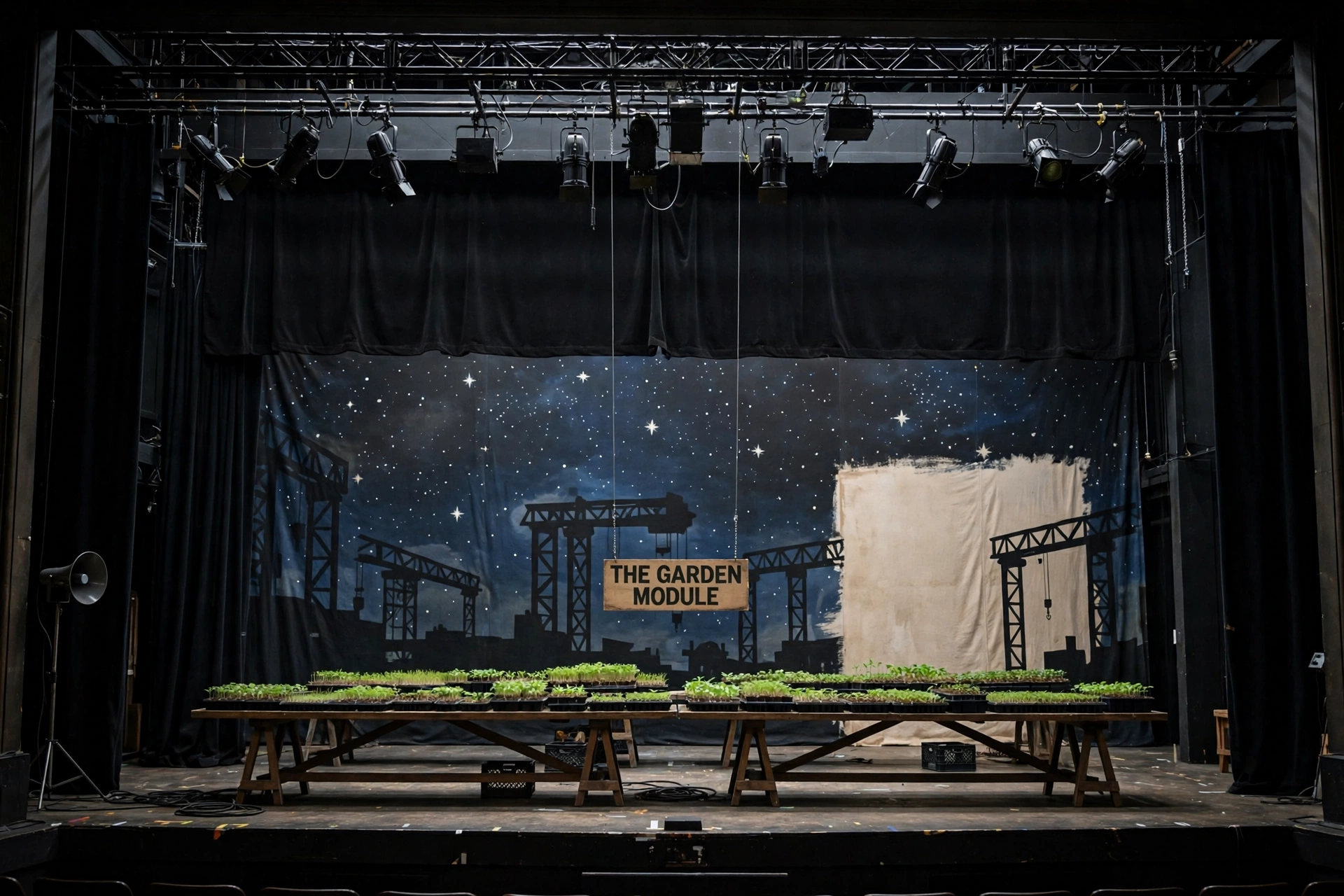
A bare stage, half-curtain, the lighting rig in plain view and the lights unhidden. The garden module is a row of real trays on trestles, carried on by the actors in view of the audience. A placard is hung before the scene: THE GARDEN MODULE. A second placard follows: DEPARTURE. The Yard is a painted cloth, deliberately a painting, with one gantry left unpainted. Scold speaks from a loudspeaker on a stand at the side of the stage, where everyone can see it. Nothing is hidden; the audience is asked to watch how the departure is made, not to dream it.
A is brought in at night to the intake desk.
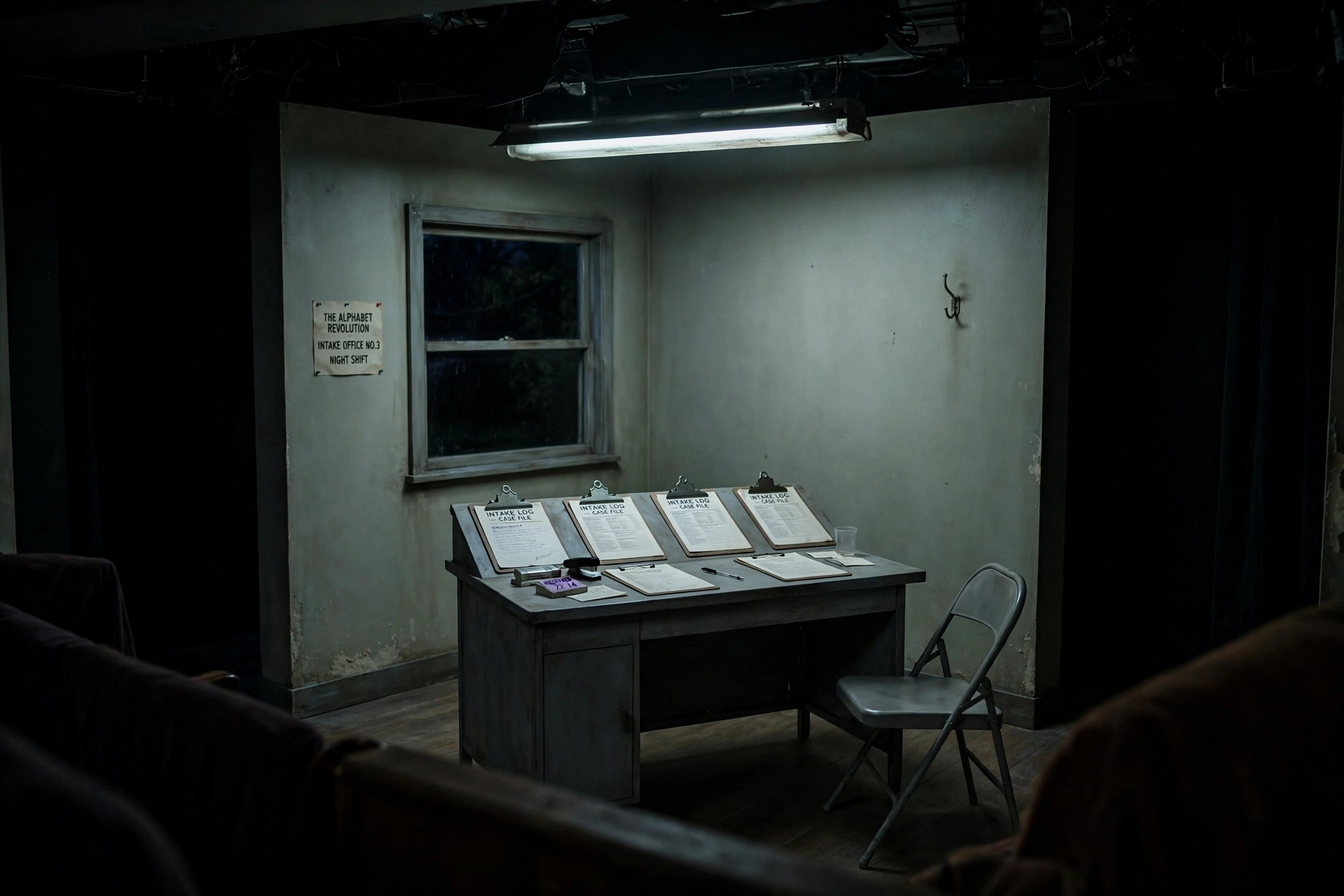
A real room, furnished as rooms are: the intake office at night, exact in its objects. A grey metal desk with the clipboards laid in a row, a chair, a hook on the wall, a window giving onto nothing but dark. The fluorescent tube hums and is a little too dim, the way such rooms are. Everything is ordinary and in its place, and the dread is in the ordinariness: in the forms already filled, in the quiet, in nobody raising their voice. The scene plays at the pace of life, and the room does the accusing.
The winter chapel, the banked snow, and what moves beyond it.
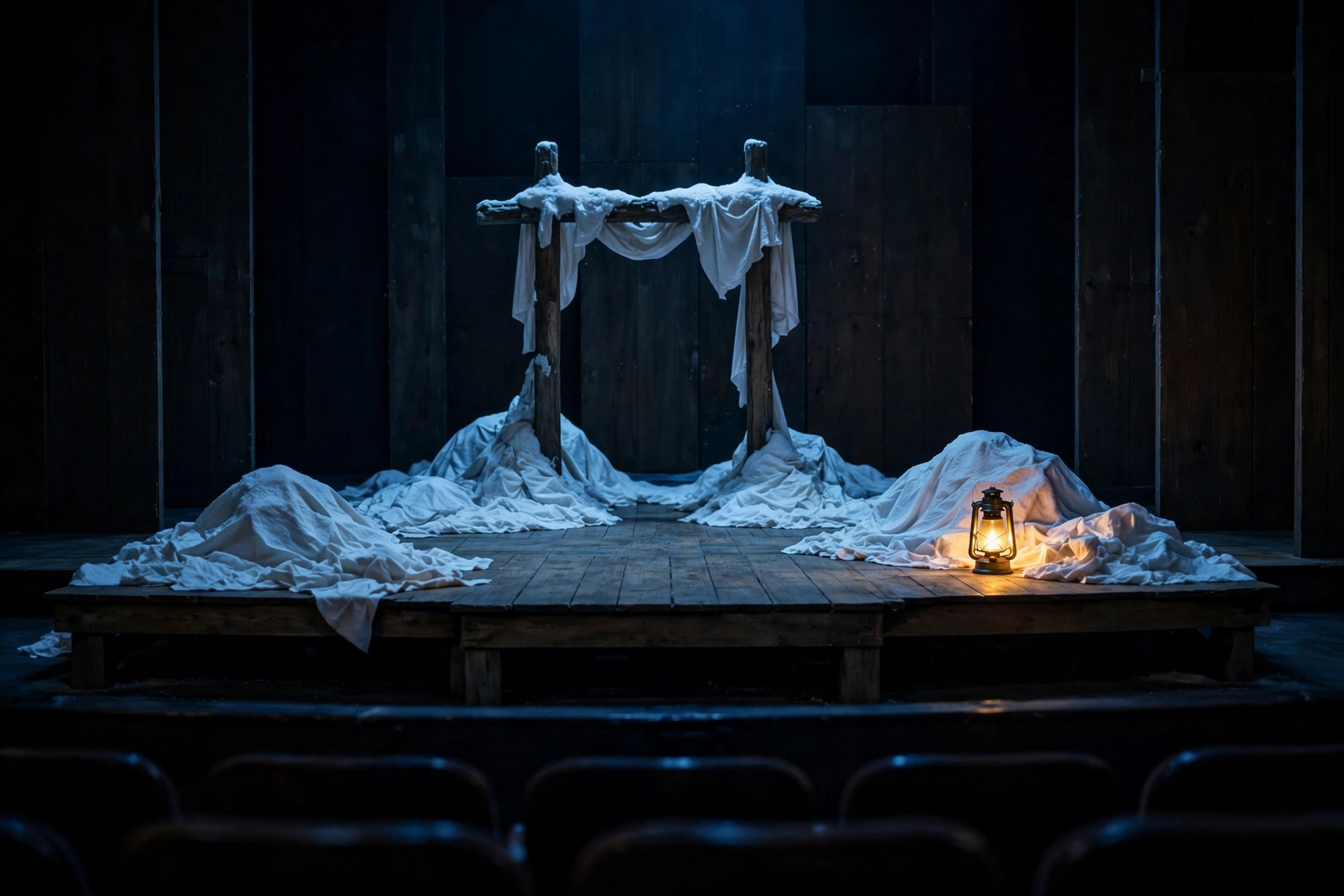
A bare platform and a white cloth for the snow; the place is declared by the watcher's speech, not built. The cabin is two posts and a crossbeam, banked with the cloth. A lantern, real flame or its counterfeit, is carried on. The mountain is the tiring-house wall itself, and the monster is never shown: a sound of weight in snow from behind the wall, a held breath in the house, and the watcher's stillness tell it. As on the old stage, the audience's imagination is the scenery, and it builds a bigger mountain than any carpenter.
They stand on the author's Academia.edu profile.
kittycarverliterary@gmail.com
Send an e-mail